
Why Multi-Tenant Architecture Is Non-Negotiable for MSP AI Platforms
By Callen Sapien, CEO and Co-Founder | July 2026
Every week I talk to MSP owners who are ready to build an AI practice. They have the clients, the relationships, and the motivation. What stops most of them is the realization that the platform they chose was never designed to manage AI across dozens of client environments simultaneously.
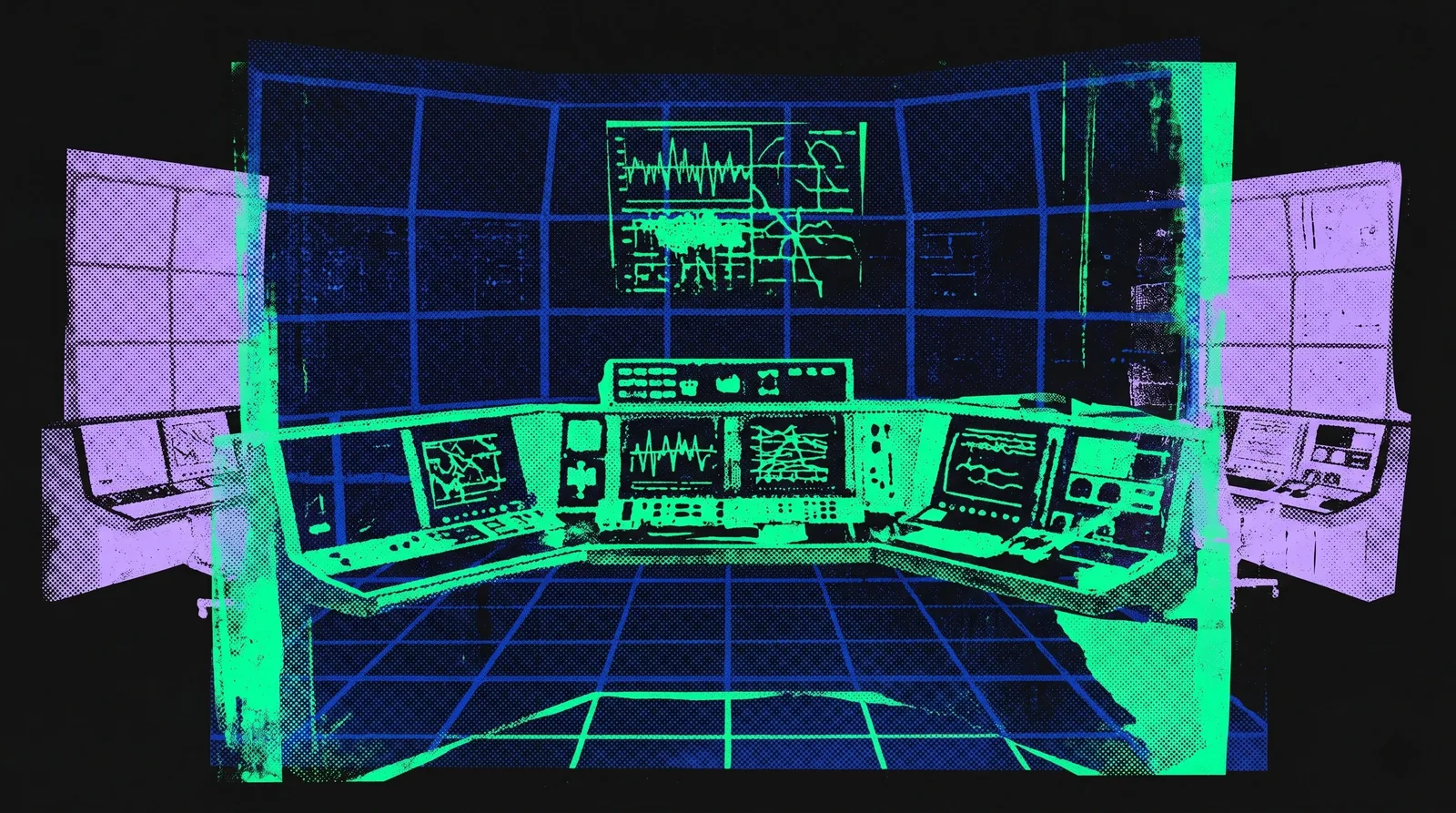
Think of a mission control room. One operator. Dozens of isolated feeds on separate screens. Total visibility, zero bleed between channels. That is exactly what managing AI across a client base should feel like. What most MSPs get instead is the opposite: a different login for every client, a different build for every deployment, and no central place to govern any of it. That is not a workflow problem. That is an architecture problem, and it does not get easier to solve the further you are into your first deployments.
Multi-tenant architecture is what separates a scalable AI practice from a custom project you rebuild for every client. The real value is operational: one platform, one dashboard, one framework you configure once and replicate across your entire client base. Full data isolation and governance are built in by design, not bolted on later.
What AI Agent Delivery Looks Like Without Multi-Tenant Architecture
According to DeskDay’s 2026 MSP Trends Report, 87% of MSPs plan to increase AI investments this year. Most will hit the same wall the moment they try to deliver an AI agent to a second client.
An MSP builds an agent for a law firm using Copilot Studio or n8n. The agent is trained on that firm’s documents, configured with their system prompts, deployed to their users. It works. Then a second client comes in: an accounting firm.
With Copilot Studio, the MSP hits a hard wall. Microsoft’s own documentation confirms that Copilot Studio does not support tenant isolation. The platform’s default configuration allows cross-tenant connections. Multi-tenant mode exists but is in public preview only, not supported for production use, and comes with significant constraints: end-user authentication across tenants is unsupported, conversation transcripts are disabled, and custom connectors are unavailable. Every client deployment is scoped to a single Microsoft Entra tenant. To serve a second client, the MSP either builds inside that client’s own Microsoft environment, meaning they need access to the client’s tenant, work within the client’s licensing constraints, and lose central control, or they rebuild the agent from scratch with no connection to the first deployment.
With n8n, the picture is the same. N8n has no native multi-tenant support. The documented approach for multiple clients is a separate n8n instance per client: separate infrastructure, separate database, separate deployment, separate maintenance cycle. The alternative is a shared instance requiring custom middleware, row-level security policies, JWT token injection, and rigorous workflow discipline to prevent data crossing between clients. One documented implementation required seven distinct engineering controls just to safely isolate two clients.
Neither approach scales. Ten clients means ten separate environments, ten credential stores, ten update cycles, and no central dashboard to govern any of it. System prompt changes get pushed manually to each environment. Offboarding a client means dismantling infrastructure. There is no parent framework. Just ten separate projects that happen to look similar.
Microsoft recognized this governance gap and is shipping Agent 365 on May 1, 2026, at $15 per user per month: a control plane for observing, governing, and securing AI agents across an organization. For large enterprises with hundreds of agents sprawling across Copilot Studio and Azure Foundry, some of that is useful. But Agent 365 operates within a single enterprise tenant. It does not solve the cross-tenant delivery problem MSPs face. The meaningful capabilities it promises, behavioral observability, Conditional Access enforcement, risk scoring, are gated entirely behind Microsoft 365 Copilot licensing that most SMB clients won’t have. Microsoft is telling the market that AI agents are ungoverned and risky while making real governance available only to customers who upgrade into a $99 per user per month suite. MSPs who aren’t paying close attention may find themselves fielding client questions about agent security that lead directly to Microsoft license upsells, pulling budget away from the managed services the MSP provides.
How Synthreo Solves This
Synthreo was built in the opposite direction. The multi-tenant architecture was not added to support the channel. It is the foundation the Synthreo platform was built on. Every product decision, from how Threo handles user sessions, to how Pylon scopes agents to tenants, to how Canopy enforces model configurations and system prompts, was made with the assumption that one MSP partner would be managing AI for dozens of clients simultaneously.
In practice, the delivery looks like this. The MSP builds an agent once in Pylon, scoped to the first client’s tenant. Second client comes in. They create a new child tenant in Canopy, configure system prompts and model access from the partner dashboard, and scope the same agent, or a variant of it, to that tenant. Client A’s data has no technical pathway to Client B’s environment by design, not by configuration. System prompt updates cascade from one place. Offboarding removes the tenant. The framework stays intact.
Your MSP account is the parent. Every client you onboard is a child tenant. From one dashboard you control which AI models each tenant can access, what system prompts govern their behavior, which users have which permissions, and how Pylon agents are scoped. Nothing bleeds across tenants. Zero Data Retention is enforced by default, meaning your clients’ data is never used to train AI models.
The governance your clients need lives in your Synthreo console, not in Microsoft’s stack, and not locked behind a $99 per user per month licensing tier. That becomes a sharper competitive point every time Microsoft pushes this story further down market.
What to Ask Any AI Platform Vendor Before You Sign
Every vendor in this space will tell you they support multiple clients. The question is where the isolation happens and what breaks when something goes wrong.
Where does tenant isolation happen: at the application layer or the infrastructure layer? Application-layer isolation uses software logic to keep client data separate. Infrastructure-layer isolation means the separation is built into how the environment is provisioned. The first can be misconfigured. The second is structural. Ask vendors to be specific.
Can one tenant’s agent ever access another tenant’s data in any configuration? Press for a technical answer, not a positioning answer. There should be no configuration path that connects one tenant’s data environment to another.
How are system prompts controlled per tenant? System prompts define how AI behaves for every user in that environment. If a vendor cannot show you per-tenant system prompt configuration with lock-down capability, you cannot guarantee consistent, governed AI behavior across clients.
How is Zero Data Retention enforced? ZDR means your clients’ data is never used to train AI models. For regulated industries this is not optional. Ask whether ZDR is on by default or something you have to enable.
How does role-based access work across the tenant hierarchy? Your team needs different access than your clients’ admins, who need different access than their end users. A platform built for MSPs should support a clear hierarchy: partner-level controls that cascade down to tenant-level configurations that cascade down to user-level permissions. Ask to see how that hierarchy works in practice, not in a diagram.
Frequently Asked Questions About Multi-Tenant AI Platforms for MSPs
What is the difference between multi-tenant architecture and just having separate logins for each client? Separate logins are access controls layered on top of a shared environment. Multi-tenant architecture means the isolation is structural. Each client tenant is provisioned as a separate environment at the infrastructure level. Separate logins can be misconfigured. Structural isolation cannot be accidentally disabled.
Why does multi-tenancy matter for MSP AI specifically? MSPs are responsible for data across dozens of clients simultaneously. A platform without true tenant isolation creates a risk that does not exist when managing a single organization. One misconfiguration in a shared environment can expose one client’s data to another. For MSPs in regulated verticals like healthcare, legal, and financial services, that exposure carries compliance and contractual consequences.
How does Synthreo’s Canopy work? Canopy is Synthreo’s partner administration portal. Your MSP account is the parent tenant. Each client you onboard becomes an isolated child tenant. From one dashboard you control which AI models each tenant can access, set and lock system prompts, manage user permissions, and enforce Zero Data Retention across all tenants. No client environment has a technical pathway to another.
Can MSPs manage AI for multiple clients without adding operational overhead per client? Yes. Because every client slots into the same framework, onboarding a new client does not require rebuilding your AI infrastructure from scratch. You configure the parent framework once. Each new tenant inherits the baseline and gets customized from there. Most Synthreo partners have new clients operational within days of kickoff.
What should MSPs look for when evaluating AI platforms for multi-tenant support? Ask where tenant isolation happens: application layer or infrastructure layer. Ask whether one tenant’s agent can access another tenant’s data in any configuration. Ask how system prompts are controlled and locked per tenant, how Zero Data Retention is enforced, and how role-based access works across the partner-to-tenant-to-user hierarchy. Vendors who cannot answer these questions specifically are likely retrofitting single-organization architecture for the channel.
Callen Sapien is CEO and Co-Founder of Synthreo, the agentic AI platform purpose-built for the MSP channel. Synthreo enables partners to deploy managed AI workspaces, secure chat, and custom AI agents with enterprise-grade governance and built-in data protection. With nearly two decades across product and go-to-market leadership, including roles tied to billion-dollar acquisitions, Callen works directly with MSPs to turn AI from experimentation into scalable, revenue-driving solutions.